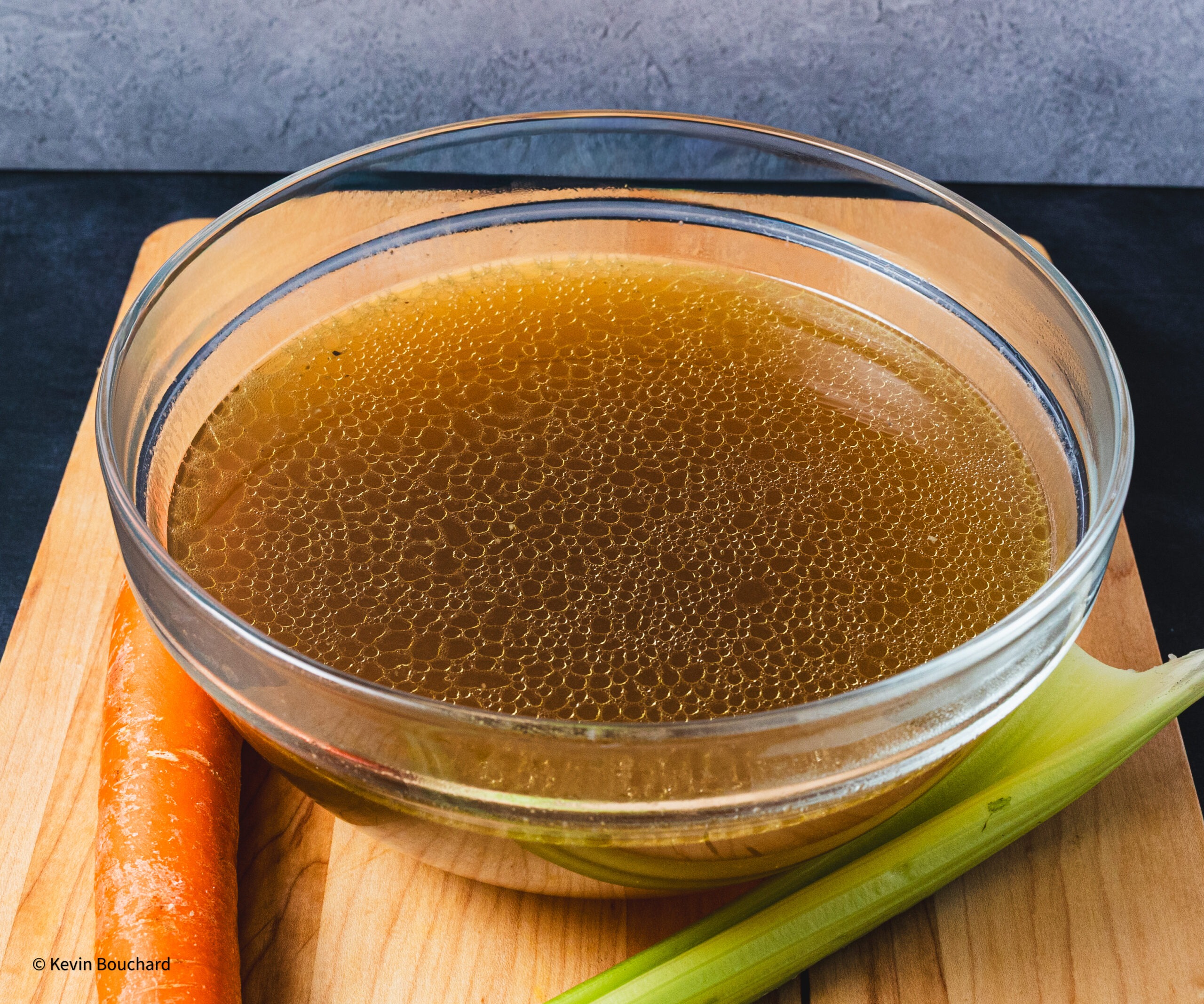
Making your own chicken stock is one of the simplest ways to improve your cooking. This roasted chicken stock recipe builds deep flavour using a few key techniques that anyone can follow at home.


Roasting Bones makes the Chicken Stock more rich
It starts with roasting chicken bones until they are well browned. This step adds colour and creates a rich, savoury base. From there, the aromatics are toasted in olive oil to activate their natural oils and build another layer of flavour before any liquid is added.
Deglazing the pot with apple cider vinegar lifts all the browned bits from the bottom and begins the extraction process early. Once water is added, the stock is gently simmered for several hours. This slow cooking pulls out collagen, flavour, and body without making the stock cloudy or bitter.
The result is a balanced, versatile stock that works in soups, sauces, rice, and everyday cooking. It also holds up well if reduced further for stronger flavour.
This method fits into a practical kitchen system. It uses simple ingredients, minimizes waste, and produces consistent results every time. By controlling heat, timing, and ratios, you can make a stock that tastes better than anything store-bought.
Once you get comfortable with this process, it becomes a regular part of your cooking routine. A good stock is not complicated, but it makes everything else better.
Turn this Roasted Chicken Stock into a Chicken Broth
You can easily turn this chicken stock into a richer, more concentrated bone broth by extending the cooking time and slightly adjusting the process. Continue to simmer it gently for 12 to 24 hours instead of stopping at 2 to 4 hours, and omit the salt during cooking.
Keep the heat low and steady, adding small amounts of water as needed to keep the bones submerged. This longer cook time allows more collagen, minerals, and flavour to extract from the bones. This results in a thicker, more gelatin-rich liquid once cooled. For even better results, include chicken feet or joints if available, as they are high in connective tissue. Once finished, strain as usual and cool the broth, then season to taste at the end. The final product will have a deeper body and a richer mouthfeel, making it ideal for sipping or using as a fortified base in soups and sauces.


Frozen Veggie scraps can be used in place of fresh
You can also replace some or all of the fresh vegetables in this recipe with vegetable scraps to reduce food waste and stretch your ingredients further. Use about 2 cups of mixed scraps such as onion skins, carrot peels, celery ends, garlic trim, and herb stems in place of the fresh vegetables, or combine both for a balanced approach. Scraps add depth and character, while fresh vegetables help maintain consistency in flavour. Keep a freezer bag of clean, usable trimmings and add to it over time, then pull from it as needed. Avoid using bitter or sulphur-heavy vegetables like broccoli, cabbage, or anything spoiled. This simple swap turns everyday kitchen waste into a valuable cooking base without sacrificing quality.

Roasted Chicken Stock
Ingredients
Equipment
Method
- Preheat oven to 220°C / 425°F.
- Toss Chicken Bones with:
- 1 tbsp Olive Oil
- 1/2 tsp Kosher Salt
- Spread on a baking sheet and roast for 35 to 40 minutes, until well browned.
- Heat remaining 1 tbsp Olive Oil in a large stock pot over medium heat.
- Add: Onion, Carrots and Celery
- Cook for 6 to 8 minutes, allowing light browning to develop.
- Add:
- Garlic (cook 30 seconds)
- Black Peppercorns (toast 30 to 60 seconds)
- Optional herbs
- Add 2 tbsp Apple Cider Vinegar and scrape up all browned bits from the bottom.
- Add roasted Chicken Bones along with any tray drippings.
- Pour in 12 cups Cold Water. Enough to cover everything with some head space.


- Slowly bring to a gentle simmer. Do not boil.
- Skim foam during the first 30 to 45 minutes.
- Add: Bayleaves and remains 1 tsp of Salt
- Maintain a gentle simmer for 2 to 4 hours.
- Strain through a fine mesh strainer into a clean container.
- Fridge: up to 4 days
- Freezer: up to 3 months
Nutrition
Notes
Tried this recipe?
Let us know how it was!Use this Broth to make these Soups


Learn more about reducing food waste at home from the Government of Canada Food Guide.