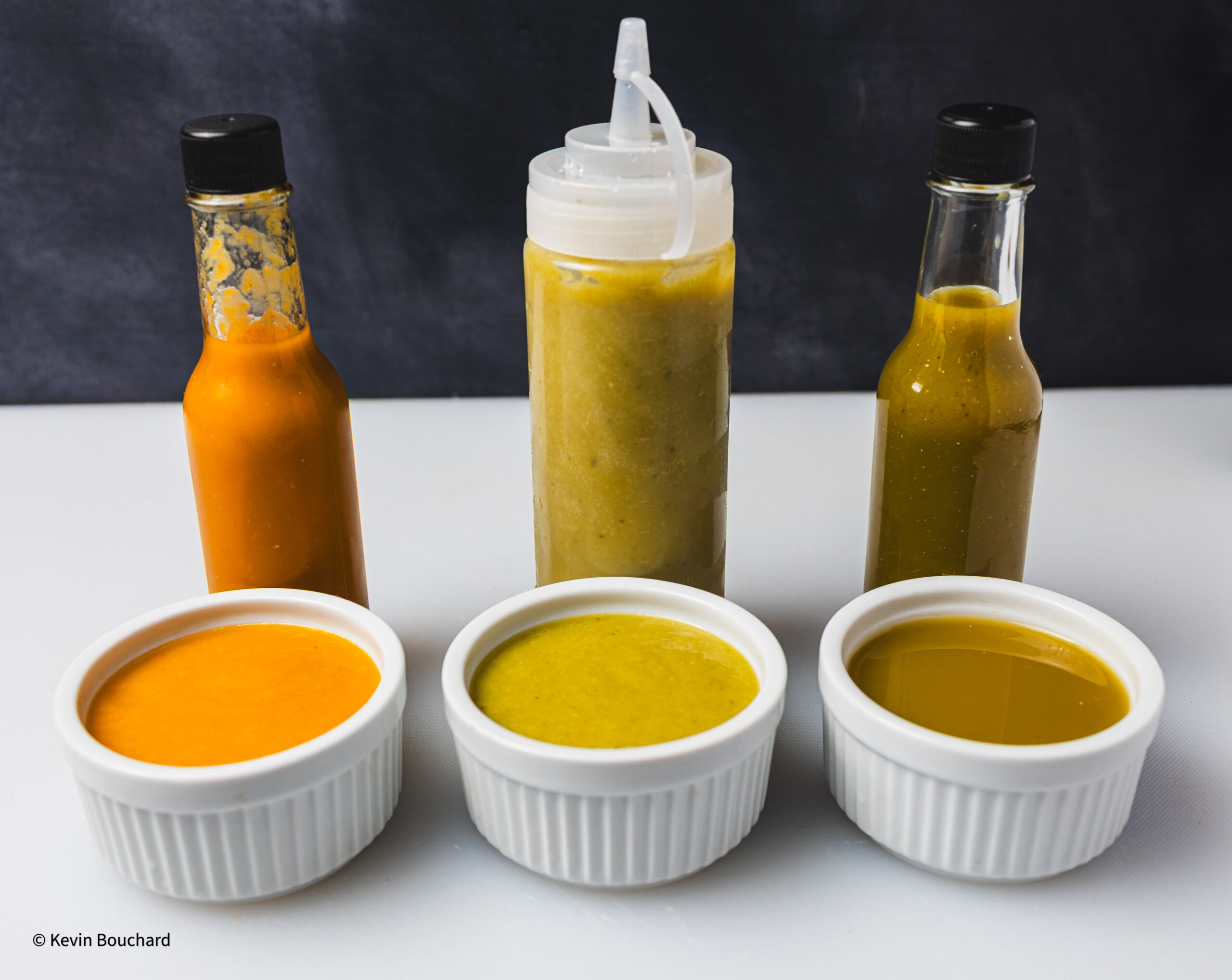

Hot Sauce Colour & Flavour Balance FAQ
What determines the colour of hot sauce?
Hot sauce colour comes mainly from the peppers you use. Fresh red peppers create bright red sauces, while orange, yellow, or green peppers produce lighter or greener tones. Dried peppers (like ancho or guajillo) add deeper brick-red or brown hues.
Other ingredients also play a role:
- Tomatoes deepen reds
- Mango, pineapple, or carrots brighten orange sauces
- Onions and garlic can slightly mute colour once blended
- Vinegar lightens sauces over time
- Cooking vs raw blending changes saturation
Heat processing matters too. Roasting or simmering peppers darkens colour through caramelization, while raw sauces stay brighter and fresher looking.
Natural separation during storage is normal. A quick shake brings everything back together.
Why does my homemade hot sauce change colour after a few days?
Colour changes usually come from oxidation and acid interaction. Once blended, oxygen slowly affects the pigments in peppers, especially bright reds and greens. Vinegar or citrus also reacts with natural plant compounds, which can slightly fade or soften colour over time.
This is normal for homemade sauces and does not mean the sauce is unsafe if your pH is properly controlled.
Why do hotter peppers need sweetness?
Super-hot peppers like reapers, scotch bonnets, and habaneros deliver intense heat fast. Without balance, that heat can overwhelm everything else.
Sweetness helps:
- Soften the initial burn
- Round out sharp acidic notes
- Highlight fruit flavours in the peppers
- Make extreme heat more approachable
Sweet ingredients do not remove heat – they shape it. Instead of hitting hard and flat, the sauce builds gradually and finishes cleaner.
That is why you will often see mango, pineapple, maple syrup, brown sugar, or honey paired with hotter peppers.
Does adding sugar make hot sauce mild?
No. Sweetness does not reduce Scoville units. It simply changes how your palate experiences the heat.
Think of it as smoothing the edges, not lowering the temperature.
Why not just make everything extremely spicy?
Great hot sauce is about flavour first, heat second.
Balancing sweet, acid, salt, and heat creates a sauce you actually want to use on food – not just taste once. The goal is a layered sauce that works on tacos, eggs, grilled meats, and bowls, not something that overpowers every bite.
Do all hot sauces need sugar?
Not always. Some sauces lean savoury or smoky instead. But when working with very hot peppers, a touch of sweetness almost always improves balance and drinkability.
Even small amounts make a big difference.
In summary…
Adding flavour ingredients to hot sauce does more than improve taste – it changes how the heat is experienced and how the sauce behaves overall. Fruits like mango, pineapple, or cranberry bring natural sugars that soften aggressive peppers and create a smoother heat curve, while also brightening colour and aroma. Garlic and onion add savoury depth but can slightly mute brightness once blended. Carrots thicken sauces naturally and help stabilize colour, while herbs and spices layer complexity without increasing burn. Acid from vinegar or citrus sharpens flavours and preserves the sauce, but too much can overpower delicate notes. Even small additions of sugar, honey, or maple syrup help round harsh edges from super-hot peppers, turning sharp heat into a more balanced, usable sauce. In homemade hot sauce, every ingredient plays a role – not just in flavour, but in colour, texture, and how long the heat lingers on your palate.
Try Some of Our Hot Sauce Recipes


Hot Sauce Heat Disclaimer
Heat levels in hot sauce can vary widely depending on the type of peppers used, how they are prepared, and individual tolerance. Peppers like ghost, scorpion, and habanero can be extremely hot and should be handled with care.
Always wear gloves when working with hot peppers, avoid touching your face or eyes, and wash hands thoroughly after handling. Start with small amounts when tasting or serving, especially when adding sweetness, as sugar can mask heat and make sauces seem milder than they are.
This guide is intended for general home cooking purposes. Always adjust heat levels to your personal tolerance and use caution when preparing or consuming spicy foods.
For More Information
For more on this topic visit The Chile Pepper Institute is the world’s only international, non-profit organization dedicated to the research and education related to Capsicum, or chile peppers.