Easy Homemade Vegetable Stock from Scraps
Making your this easy homemade vegetable stock is one of the simplest ways to improve your cooking while saving money at the same time. It takes ingredients you would normally throw away and turns them into a rich, flavourful base that can be used in dozens of recipes.
This is not about being fancy. It is about being practical. Every onion peel, carrot end, and celery leaf has flavour left in it. Instead of wasting it, you can build something useful that belongs in your kitchen every week.
This method saves money and stretches your groceries further. It also helps reduce food waste at home. You can find more practical ideas in this guide on reducing food waste.


What Soups Use Vegetable Stock?
Vegetable stock is one of the most versatile bases you can keep on hand. It works well in both light and hearty soups. Classic options include minestrone, vegetable soup, lentil soup, and tomato soup. It is also perfect for blended soups like carrot, squash, or potato leek, where a clean base lets the main ingredient stand out.
You can also use vegetable stock in place of chicken stock in many recipes. It works in risotto, brothy noodle soups, and even lighter versions of French onion soup when you want a more balanced and less heavy flavour.
A Smart Way to Clean Out Your Fridge and Freezer
This recipe is one of the easiest ways to reduce food waste at home. Instead of throwing out vegetable scraps, you collect them and turn them into something useful.
Keep a freezer bag for scraps. Add Onion Skins, Carrot Peels, Celery Ends, Garlic Trimmings, Mushroom Stems, and Herb Stems throughout the week. Once the bag is full, you are ready to make stock.
This method saves money and stretches your groceries further. It also means you always have a homemade base ready to go instead of reaching for store bought options.
Why Homemade Stock Is Better
Store bought stock can work in a pinch, but it often contains added sodium, preservatives, and a flat flavour profile. Homemade vegetable stock gives you control. You decide what goes in, how strong it is, and how it tastes.
It also builds layers of flavour that carry through your cooking. A good stock turns a simple soup into something worth repeating.
Using Older Vegetables
You can absolutely use vegetables that are starting to wilt. Carrots, Celery, Onions, and Herbs that have lost their firmness still carry plenty of flavour and are perfect for stock. As long as they are not slimy, mouldy, or giving off a bad smell, they are good to use.
This is another easy way to reduce food waste and get more value out of your groceries.
At the same time, avoid using vegetables like Broccoli and Cauliflower in large amounts. These can release sulphur compounds during cooking, which can make your stock taste bitter and overpower the rest of the flavours.
How to Store Vegetable Stock
Once your stock is strained and cooled, proper storage makes all the difference.
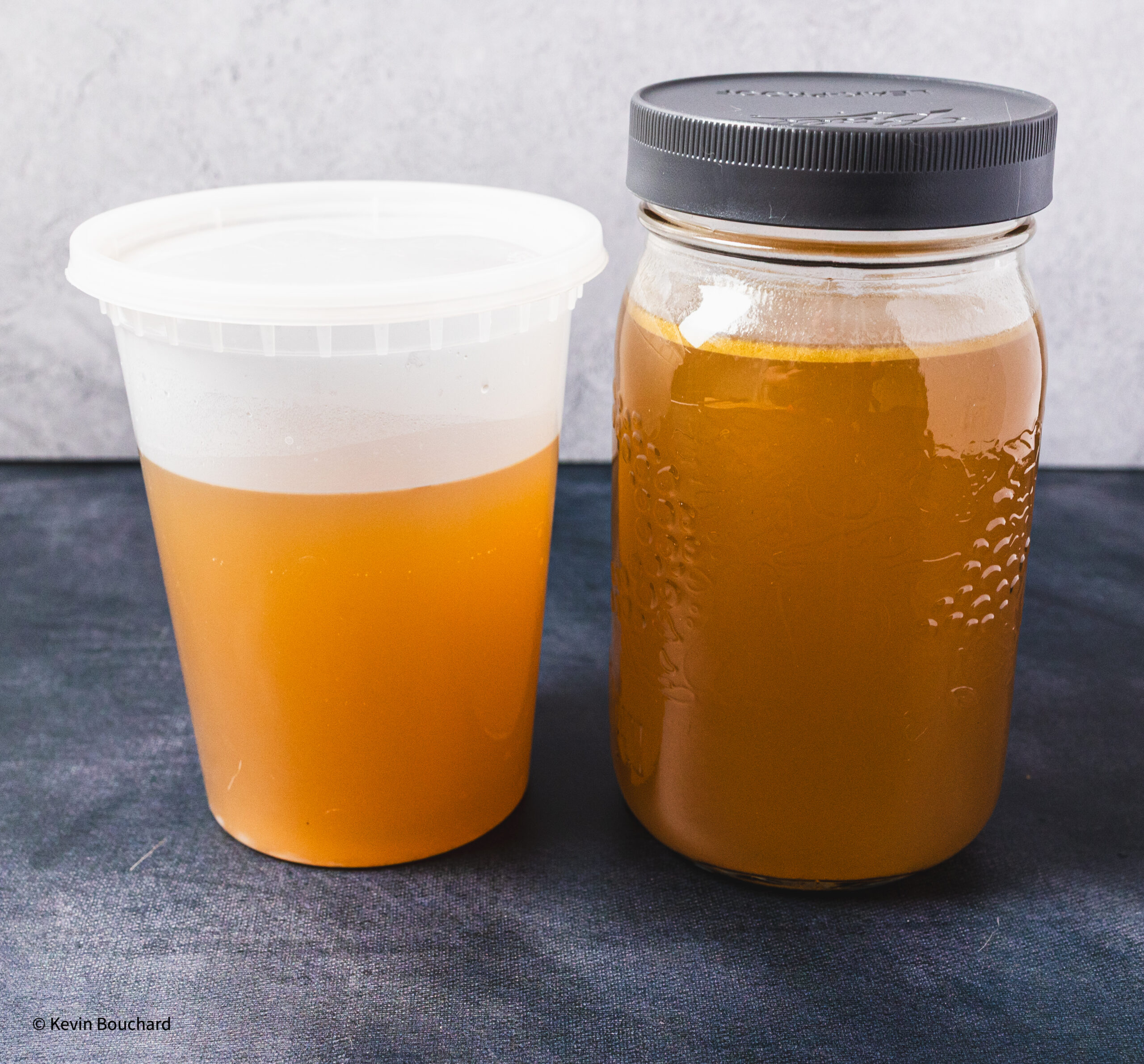
If you plan to use it within a few days, store it in glass jars in the fridge. Glass is non-reactive, easy to clean, and does not hold odours. It is also ideal for reheating small portions as needed.
For longer storage, freezing is the better option. Use plastic deli containers for this. They are durable, stack well, and make it easy to portion your stock. Leave a little space at the top of each container to allow for expansion as the stock freezes.
You can also freeze smaller portions for convenience. This makes it easy to grab exactly what you need for soups, sauces, or cooking grains without thawing a full batch.

Vegetable Stock
Ingredients
Equipment
Method
- Heat Olive Oil in a large pot over medium heat. Add Onion, Carrot, and Celery. Cook for 5 to 7 minutes until slightly softened.
- Stir in Garlic and cook for 30 seconds. Add Vegetable Scraps and cook for another 2 to 3 minutes to develop flavour.
- Pour in Apple Cider Vinegar and scrape the bottom of the pot to lift any browned bits.
- Add Water, Bay Leaf, Peppercorns, and Optional Herbs. Bring to a light boil, then reduce to a gentle simmer. Cook uncovered for 45 to 60 minutes.
- Strain out solids using a fine mesh strainer. Let the stock cool before storing.
- Store in Glass Jars in the fridge for up to 5 days or freeze in Plastic Deli Containers for longer storage.

